Dummy Ticket for Visa: What It Is, Where to Get One, and What Embassies Accept
If you're applying for a Schengen visa and the checklist says you need proof of onward travel, you've probably stumbled across the term "dummy ticket for visa" while searching for options. Maybe you're staring at an $850 round-trip fare wondering if you should just buy it and hope your application gets approved. You don't have to. A dummy ticket exists specifically for this situation — and understanding what makes one legitimate versus problematic can save you money, time, and a rejected application.
Here's what you need to know: not all dummy tickets work the same way, and the method behind the document matters more than most applicants realize.
What Is a Dummy Ticket for Visa Applications?
A dummy ticket for visa purposes is a travel document that shows your planned flight details — route, dates, airline, flight numbers, passenger name — without requiring you to purchase an actual confirmed ticket.
The term comes from travel industry shorthand for a reservation that exists as documentation rather than a committed purchase. When visa applicants say "dummy ticket," they generally mean any document that satisfies an embassy's proof of travel requirement without putting hundreds of dollars on the line before approval arrives.
Embassies need to verify that you have a planned departure from their country — not that you've already paid for it. The Spanish Embassy puts it directly in their published guidance: "We recommend that you do not purchase travel tickets until your visa has been approved. On the other hand, you may provide us with a reservation, a planned itinerary or an online printout of a round-trip ticket."
But here's where it gets important: there are fundamentally two different ways a dummy ticket gets produced, and the difference between them can quietly derail an otherwise solid application.
Dummy Ticket vs. Flight Itinerary vs. Flight Reservation — Why the Terms Matter
People use these terms interchangeably in conversation. But when you're submitting documents to an embassy, the distinction becomes meaningful because they represent different underlying systems.
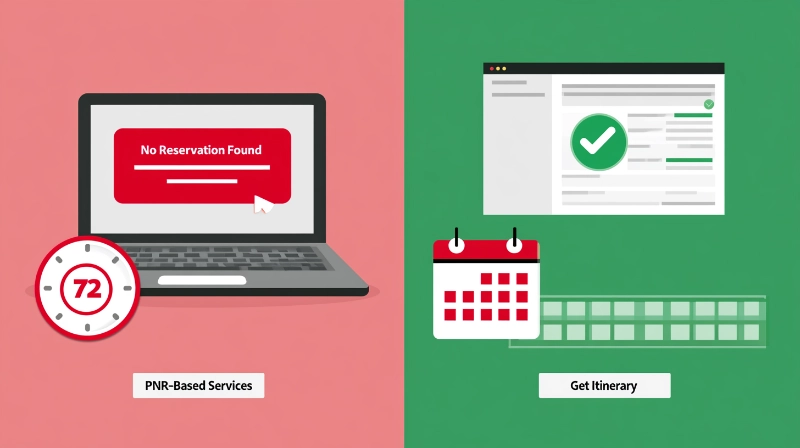
Flight reservation (PNR-based): A temporary hold made directly through an airline's booking system. This generates a Passenger Name Record — a six-character alphanumeric code tied to a specific seat on a specific flight. The reservation is real. The seat is held. But no payment has been made, and airlines don't hold unpaid seats indefinitely. Most PNR holds expire within 24 to 72 hours before the seat goes back into inventory.
Flight itinerary (document-based): A travel document generated from real flight data — genuine routes, real airlines, actual schedules — that lays out your intended travel plan. Services like Get Itinerary provide this type of document. Rather than relying on an airline hold that evaporates in 72 hours, the itinerary is hosted on a dedicated reservation portal and verifiable via QR code for the entire period leading up to your travel date.
Both satisfy the embassy requirement of demonstrating a travel plan. The critical difference is in how they hold up over time — and that's where many applicants run into trouble they never saw coming.
The Structural Problem With PNR-Based Dummy Tickets
When I talk to applicants who've had verification issues, the story follows a predictable pattern.
They order a dummy ticket from a service that creates a short-lived PNR hold through an airline's reservation system. The document arrives with a six-character booking reference. They submit their visa application. Everything looks fine.
Then their application sits in a processing queue for two weeks — because that's standard for Schengen visas during busy seasons. By the time a consular officer pulls up their file and attempts to verify the flight reservation, the 72-hour hold has long since expired. The airline's system returns: no reservation found.
That's a problem. Even when everything else in the application is legitimate and well-prepared, a document that can't be verified raises questions about the rest of your paperwork. The officer doesn't know whether the reservation expired naturally or whether the document was fabricated from the start.
This is the structural limitation of the PNR approach: the validity window is controlled by the airline, not by you, and it's short by design. Airlines aren't in the business of holding unpaid seats for weeks while visa applications process. Their systems are built to release inventory quickly.
How Get Itinerary's Dummy Ticket for Visa Works Differently
Get Itinerary uses a different technical approach that eliminates the expiry problem entirely.
The itineraries are generated using real flight data from Global Distribution Systems — the same databases that airlines and travel agencies use for worldwide flight inventory. The flights shown on your document are real scheduled services operating on real routes. We're not inventing flight numbers or making up airline codes.
Rather than creating a temporary airline hold that expires in days, your itinerary is stored on Get Itinerary's own reservation portal and linked to a unique QR code printed on the document. When an embassy wants to verify the details — and they do verify — they scan the QR code. It takes them directly to your itinerary record, which displays all the travel details exactly as they appear on the printed PDF.
That record stays live and accessible right up until 24 hours before the initial travel date on the itinerary. There's no 72-hour countdown. There's no "no reservation found" message appearing three weeks into processing. The document verifies cleanly every single time someone checks it, for as long as the visa process requires.
This is particularly important for Schengen applications, where the standard processing window is 15 calendar days — but can extend to 30 or even 60 days during peak travel seasons or when additional administrative processing is required. A PNR-based hold doesn't survive that timeline. A QR-verified itinerary does.
Get your embassy-ready flight itinerary with QR verification — delivered within minutes after checkout for $15, or bundled with a hotel reservation for $25.
Order Now →Important Limitation: When You Actually Need a Confirmed PNR
We need to be direct about this: some embassies — particularly for certain US, UK, and Canadian visa categories — do require a confirmed airline booking with a valid PNR from the airline's system.
If your specific embassy explicitly states "confirmed ticket" or "PNR required" in their documentation checklist, a flight itinerary won't meet that requirement. You'll need to purchase a refundable ticket directly from an airline and submit that booking reference.
Embassy requirements vary by country, by visa type, and sometimes even by consulate location. They also change. What worked for a Schengen application last year might not match current French consulate requirements in New York this year.
Always check your specific embassy's current published requirements before ordering any document. If you're uncertain whether a flight itinerary is acceptable for your application, contact the embassy or consulate directly and ask. That five-minute phone call can save you a rejected application.
Is Using a Dummy Ticket for Visa Legal?
Yes — when it's done correctly. A planned travel itinerary submitted as proof of travel intent is a normal, widely accepted part of the visa application process across most countries.
Embassies understand that applicants can't commit hundreds or thousands of dollars to flights before approval arrives. They're asking you to demonstrate that you have a concrete travel plan — not that you've already paid for it. The Spanish Embassy guidance quoted earlier makes this explicit: they actively recommend against buying tickets before approval.
What's not acceptable — and what will get you banned from applying for years — is fabricating a document. That means inventing flight numbers that don't exist, creating a fake booking reference that doesn't resolve anywhere, or editing a real document to change dates or names. That's document fraud, and consular officers are experienced at spotting it.
A legitimate electronic itinerary from a reputable service, generated from real flight data and verifiable through a QR code or other authentication method, is a completely different thing. It's honest documentation of a genuine travel plan, which is exactly what embassies are asking for.
Which Countries and Visa Types Accept Dummy Tickets for Visa Applications?
Schengen Visa (27 European Countries)
Flight itineraries are standard and widely accepted across all Schengen member states: Austria, Belgium, Croatia, Czech Republic, Denmark, Estonia, Finland, France, Germany, Greece, Hungary, Iceland, Italy, Latvia, Liechtenstein, Lithuania, Luxembourg, Malta, Netherlands, Norway, Poland, Portugal, Slovakia, Slovenia, Spain, Sweden, and Switzerland.
Your document needs to show arrival into your first Schengen country (your port of entry) and departure from the Schengen area before your intended stay period ends. Entry and exit dates must align with your accommodation dates and travel insurance coverage dates. Inconsistencies between documents draw scrutiny.
UK Standard Visitor Visa
UK Visas and Immigration accepts evidence of travel plans. A flight itinerary qualifies. UK officers tend to read the entire application as a coherent package — your flights, accommodation, financial evidence, employment ties, and stated purpose should all support the same story. Contradictions between documents matter more than the document format itself.
Canada Visitor Visa (TRV)
Immigration, Refugees and Citizenship Canada (IRCC) accepts travel itineraries as supporting documentation for temporary resident visa applications. Canadian visa officers focus heavily on ties to your home country and the credibility of your stated purpose. The travel itinerary is one piece of a larger evidence package.
Dubai and UAE Visa
Flight itineraries are a standard requirement for UAE visa applications processed through airlines, hotels, or tour operators. The UAE's visa system is more streamlined than many Western countries, but documentation requirements are still precise.
Australia Visitor Visa (Subclass 600)
The Australian Department of Home Affairs accepts evidence of intended travel arrangements. Including accommodation details alongside the flight itinerary strengthens the application — they want to see that the entire trip is planned, not just the flights.
US B1/B2 Visitor Visa
The US doesn't mandate a flight itinerary as formally as Schengen countries do. But including one in your application package makes your trip considerably more concrete during the consular interview. Officers want to see that you have specific plans — not vague intentions to "visit sometime." If you're going to a wedding, a business conference, or to see family, show them the dates. A flight itinerary does that.
Important: This is a general overview based on standard requirements. Visa policies change. Always verify current requirements with your specific embassy or consulate before submitting your application.
What Makes a Strong Dummy Ticket for Visa — Required Elements
Whether you're using an electronic itinerary service like Get Itinerary or any other approach, the document itself needs to contain specific information to hold up under embassy scrutiny. Missing any of these elements can cause verification problems or raise red flags.
- Your full name exactly as it appears on your passport. Not a nickname. Not an abbreviated version. Exactly as your passport reads — including middle names, hyphens, and any suffixes. If your passport says "María José Fernández García," that's what the itinerary must say. Name mismatches are one of the most common reasons documents get questioned.
- Real airline names and valid flight numbers. The flights shown must be genuine scheduled services on real routes. If a visa officer searches the flight number and it doesn't exist in the airline's published schedule, that document is getting rejected and your application credibility is damaged.
- Correct and consistent travel dates. Entry date, exit date, and all connecting flights need to align with your other application documents — hotel bookings, travel insurance validity, and your stated purpose of travel. If your insurance runs June 10–20, your hotel is June 10–20, but your flight shows arrival on June 12, someone will notice.
- Complete departure and arrival information. Both airports must be clearly identified with IATA codes and full city names. "London" isn't specific enough — Heathrow (LHR), Gatwick (LGW), and Stansted (STN) are different airports with different implications for your travel plan.
- Verification method clearly indicated. For Get Itinerary documents, this is the QR code that links to the portal record. For PNR-based documents, it's the booking reference. The embassy needs a way to independently confirm that the information on the document is genuine.
How to Get a Dummy Ticket for Visa Through Get Itinerary
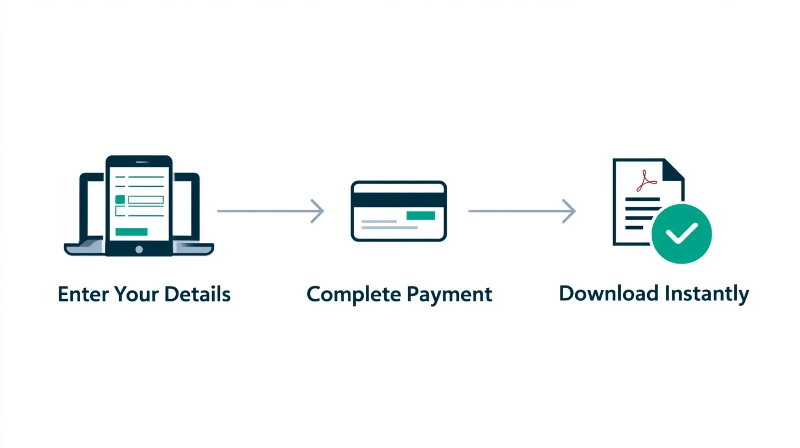
The process is designed to be fast and straightforward. Most customers complete their order in under five minutes.
Step 1: Choose your documentation. Flight itinerary only: $15. Hotel reservation only: $15. Both together: $25. If you're traveling with family or a group, adding additional travellers to the same document costs $10–$20 depending on the plan you choose.
Step 2: Enter your travel details. You'll need your full name exactly as it appears on your passport, your departure city, your destination, and your travel dates. That's it. We handle the flight selection and routing based on real scheduled services.
Step 3: Download your document immediately. Your embassy-ready PDF is available at the end of checkout — within minutes after payment clears. No waiting for business hours, no email correspondence, no delays. The document includes a QR code that links directly to your itinerary record on our reservation portal.
If your plans change: Revisions are unlimited and free right up until the initial travel date on the itinerary. If your dates shift or you need to correct a detail, just email us with your current document and the changes needed. We'll update the record and send you a revised PDF.
After your visa approval: You don't need to cancel anything or contact us. Once approval comes through, go ahead and book your real flights and accommodation. The itinerary record closes automatically 24 hours before the travel date, and there's nothing else you need to do.
Critical clarification: Get Itinerary documents are NOT confirmed bookings. They cannot be used to board a flight or check into a hotel. They are supporting documents for visa applications only. The itinerary shows your planned travel — not a paid reservation.
Common Mistakes That Get Dummy Tickets for Visa Questioned
Even with a properly prepared itinerary, a few avoidable errors regularly cause verification problems or draw unwanted scrutiny from consular officers.
- Name mismatch between passport and itinerary. This is the single most common error. The name on the itinerary must be character-for-character identical to the name on your passport. A missing middle name, a shortened first name, or a single misspelled letter is enough to trigger questions. Always double-check this before submitting.
- Date inconsistencies across supporting documents. If your travel insurance runs June 10–20, your hotel booking covers June 10–20, but your flight itinerary shows arrival on June 12, that inconsistency stands out. Every document in your application should tell the same coherent story about your travel dates.
- Missing return flight. Most visa types — particularly Schengen short-stay visas — require proof of onward travel showing both entry and exit from the country or region. An outbound flight alone usually isn't sufficient. The embassy needs to see that you plan to leave before your authorized stay expires.
- Using a fraudulent online generator. Free tools that create fake-looking PDFs with invented booking references are not legitimate documents. They're fabrications, and embassy staff are trained to spot them. Submitting fraudulent documentation can result in a multi-year visa ban — not just a single rejection.
- Ordering too close to your appointment. Getting your itinerary the night before your embassy appointment leaves zero time to correct errors if there's a detail wrong. Order at least a few days early so you have time to review the document and request revisions if needed.
- Not verifying embassy requirements first. Ordering a flight itinerary when your specific embassy explicitly requires a confirmed PNR wastes your time and money. Check the requirements before you order anything.
Need your flight itinerary today? Order now for $15 — delivered within minutes, QR-verified, valid until 24 hours before your travel date.
Order Now →Frequently Asked Questions
Is a dummy ticket the same as a fake ticket?
No — and the distinction is critical to understand. A fake ticket is a fabricated document with invented flight numbers, made-up booking references, and details that don't correspond to any real reservation or flight data. It's document fraud.
A legitimate dummy ticket or flight itinerary is generated from real flight information using actual airline schedules and routes, and it provides a genuine verification method. Get Itinerary's documents are built from Global Distribution System flight data — the same source airlines use — and they're verifiable via QR code on our reservation portal. One approach is accepted by embassies worldwide. The other can get you banned from applying for years.
Do Get Itinerary documents include a PNR?
No. Our itineraries are verified through a QR code that links to our reservation portal, not through an airline Passenger Name Record.
This is actually a significant advantage for visa applications. PNR-based holds typically expire within 24–72 hours, after which the airline's system returns "no reservation found" when anyone attempts to verify them. Our portal record remains accessible and verifiable right up until 24 hours before the travel date listed on the document — which eliminates the risk of a verification failure happening during a long processing period. Your document works throughout the entire visa timeline.
How long is the itinerary valid for?
Your itinerary record is accessible via the QR code on Get Itinerary's reservation portal until 24 hours before the initial travel date shown on the document. After that point, the record closes automatically.
If your travel plans change before that deadline — if you need to adjust dates or make corrections — revisions are unlimited and free. Just email us with your current document and the changes you need. We'll update the record and send you a revised PDF with the same QR verification.
What happens if my embassy requires a confirmed PNR?
Some embassies — particularly for certain US, UK, and Canadian visa categories — do specifically require a confirmed airline ticket with a valid PNR directly from the airline's reservation system. If that's what your embassy requires, a flight itinerary won't satisfy the documentation checklist.
In those cases, you'll need to purchase a refundable ticket directly from an airline and submit that PNR as your proof of travel. The ticket needs to be fully paid and confirmed in the airline's system. Always check your specific embassy's current requirements before ordering any document — requirements vary by country, visa type, and sometimes by consulate location.
Do I need to cancel anything after my visa is approved?
No. Get Itinerary handles everything on the backend. Once your visa approval comes through, you simply go ahead and book your real flights and accommodation for the actual trip.
There's nothing to cancel, no fees to track, and no deadlines to worry about. The itinerary record closes automatically 24 hours before the travel date, and you don't need to take any action. Just book your real travel and enjoy your trip.